

FREE Shipping on ALL Orders of $200 or More!
At night, outdoor spaces are no longer defined by landscaping or layout. They are defined by light and that is where a Victorian style light pole becomes an important part of the overall structure.
During the day, everything is defined by structure, lawns, pathways, landscaping and architecture. But at night, all of that depends on something else entirely. Lighting becomes the thing that decides whether a space feels open, unclear or well-defined.
Most people don’t think about lighting until the very end of an outdoor setup. But in reality, it has one of the biggest impacts on how the space is actually experienced.
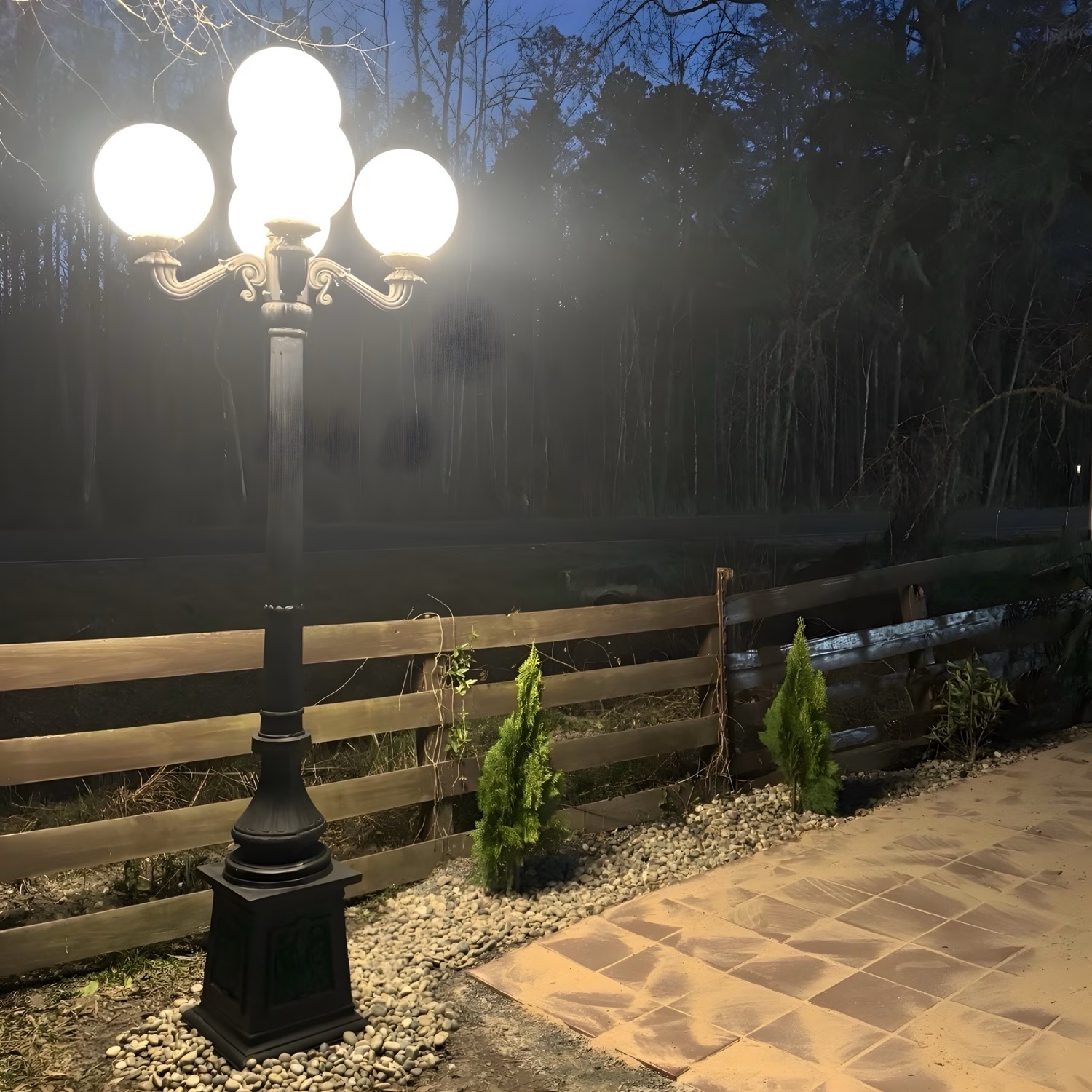
A fixture like the 9.5 Ft 5 Arm Victorian Light Pole from The Kings Bay is built around that idea, something that helps shape the way the entire outdoor area feels.
There are outdoor lights that simply blend in, and there are ones that immediately change the feel of a space.
The difference usually comes down to proportion and presence.
At around 9.5 feet in height, this Victorian style light pole naturally comes in that second category. It doesn’t sit low or disappear into landscaping. It stands at a scale that makes it part of the overall layout, especially in larger outdoor environments.
That presence is important in places like:
In all of these, lighting isn’t just about brightness. It’s about giving structure to open space so it doesn’t feel visually flat once the sun goes down.
Victorian-style lighting has stayed relevant for one simple reason: it feels enduring rather than trend-based.
There’s a certain balance in this type of design. It is detailed, but not overwhelming. Decorative, but still structured. That balance makes it easy to place in different types of environments without it feeling out of place.
The five-arm design follows that same principle.
Instead of focusing light in one direction, it distributes brightness across multiple points. This creates a more even visual effect, which feels softer and more natural in outdoor spaces.
One thing people often overlook is how differently spaces are perceived after dark.
During the day, the eye reads detail, textures, colors, plant shapes, and architectural lines.
At night, that changes completely. The eye starts to follow light instead of structure.
That’s why certain outdoor spaces feel confusing or empty after sunset, even if they look well-designed during the day. There’s no visual guidance anymore.
A well-placed light fixture solves that by creating reference points. It gives the eye something to follow.
This vintage Victorian pole light naturally becomes one of those reference points in a space, not because it becomes the center of attention, but because it has scale and symmetry that hold attention without forcing it.
Outdoor lighting has one job that often gets ignored: it has to survive real conditions over time.
Sun, rain, temperature changes, and exposure all matter more than appearance at installation.
This light pole is constructed using non-rust hand-cast aluminum, which is one of the key reasons it works well in long-term outdoor environments. It doesn’t feel lightweight or temporary. It has the weight and structure needed for long-term outdoor stability.
The black painted finish keeps the visual tone classic and adaptable across different outdoor designs. It doesn’t lock the space into one aesthetic direction, which makes it easier to work with both traditional and more modern environments.
The function of this piece goes beyond simply providing light.
Each of the five arms is fitted with 12-inch shatterproof globe shades, designed to soften and distribute light rather than concentrate it. Inside, standard base bulbs with ceramic sockets support up to 75W per light.
What that creates in real use is a controlled spread of light across a wider area, instead of harsh brightness in one direction.
This matters in outdoor environments because lighting is not just about visibility; it’s about comfort.
Too much direct light can flatten a space. Too little creates uncertainty. A balanced spread creates an appealing visual structure.
That’s the space this fixture is designed to sit in.
This type of lighting isn’t meant for every corner or small decorative area. It works best when it has room to establish itself.
You’ll typically see it used in:
In each of these spaces, its role is less about decoration and more about visual organization.
One of the most noticeable things about installing a fixture like this is that nothing else in the space has to change for the environment to feel different.
The landscaping stays the same. The structure stays the same. The layout stays the same.
But the way it feels at night shifts.
That happens because lighting affects perception more than physical design does in dark environments. Once this kind of structured lighting is in place, the space feels more structured and cohesive.
Outdoor spaces are often designed to look complete during the day. But what really defines them is how they look at night.
A fixture like this Victorian style light pole doesn’t try to change the space it’s placed in. It simply makes the layout clearer once it’s lit at night.
And in many cases, that small shift is what makes everything else finally feel in place.